An 80S photo is not just a faded colour preset. The strongest AI results rebuild a current portrait as a believable photograph from the decade: the hair, clothing, room, camera flash, film softness and social context all need to agree. Start with a clear reference image, decide what kind of 1980s photograph you want, and ask an AI image generator or style-transfer tool to change the visual language while preserving the person's face, age, skin tone and proportions.
The practical workflow is simple: choose a source photo, set the period and photographic format, generate a few variations, then inspect identity, hands, clothing, background objects and text before sharing. DraDra is useful when you want to turn a photo into an art-directed retro portrait or family scene while keeping the original subject and composition recognisable.
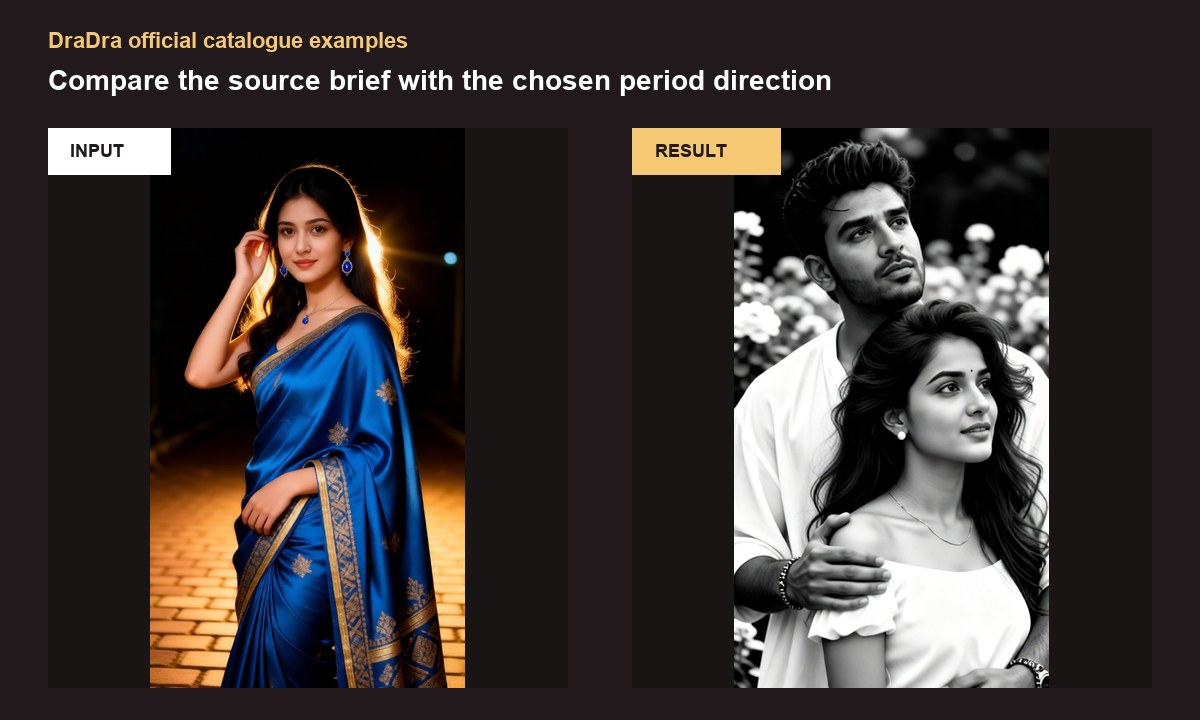
Use an input/result comparison to judge the face and composition before judging the colour treatment.
What does “80S photo” mean in AI image generation?
In an AI image workflow, an 80S photo is a reference-led transformation. The uploaded image supplies the subject and composition; the instruction or selected effect supplies the decade, styling and photographic treatment. The model may restyle the hair, clothing, interior, props, colour response and texture, but the person's identity should remain stable.
That distinction matters. A realistic 1985 family snapshot uses direct flash, ordinary clothing, modest grain and a slightly imperfect print. An 80s-inspired poster may use neon, magenta light, grids and dramatic styling. Both are valid, but they answer different creative goals.
Choose the 1980s photograph before the effect
Name the photograph you are trying to recreate. Useful formats include:
- a family-album snapshot in an Indian home;
- a school or yearbook portrait;
- a small photo-studio portrait;
- a Bollywood publicity image;
- a wedding or reception photograph;
- a VHS home-video still;
- an 80s-inspired neon or vaporwave portrait.
Each format implies different posing, lighting and background details. “Make it retro” is too broad. “A direct-flash family photograph taken in an Indian living room in 1986” gives the model a coherent target.
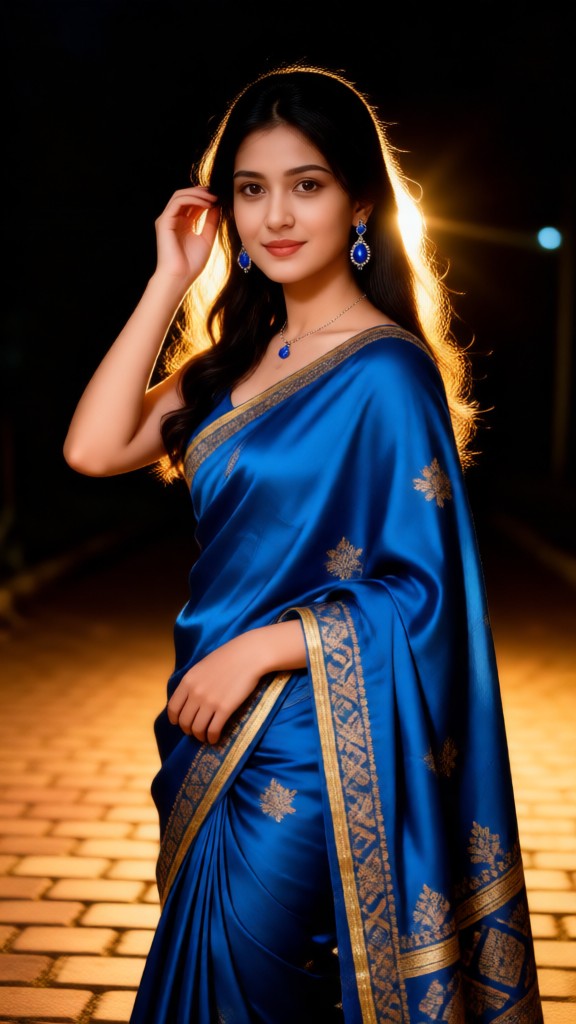
Official DraDra result example: the retro treatment is useful for an Indian portrait concept, but review the face, sari border, jewellery and background before treating it as a finished 80S photo.
Prepare the reference image
Use a sharp portrait or group photo with readable faces, natural lighting and enough space around the subjects. The reference does not need to look old. A clean modern photo often gives the model more identity information than a low-resolution scan.
Before generating, decide which elements are fixed and which may change.
| Keep fixed | Allow the AI to change |
|---|---|
| Face shape, eyes, skin tone and age | Hair volume and period haircut |
| Body proportions and relative positions | Clothing, collars, denim or sari styling |
| Main pose and relationship between people | Room, furniture and small props |
| Important cultural or family details | Film response, softness and print fading |
| Any text or logo that must remain accurate | Decorative background texture |
For a group image, identify people by position: “person on the left,” “child in the centre,” and “partner on the right.” This helps prevent faces, jewellery and clothing from migrating between subjects.
A reliable 80S AI photo prompt
Use this as a starting instruction in an AI image generator or a prompt-enabled image editor. If a product uses preset effects rather than a prompt box, treat the same ideas as your selection and review checklist.
Transform the uploaded photo into a believable photograph taken in 1986. Use the uploaded image as the definitive identity reference. Preserve the subject's recognizable face, facial geometry, natural skin tone, age, expression, gaze and body proportions. Restyle only the hair, clothing, accessories, background, lighting and photographic treatment. Use ordinary, period-appropriate 1980s styling rather than a costume. Photograph the scene with direct on-camera flash, soft-edged shadows, slightly faded colour, warm skin tones, subtle 35mm grain, mild optical softness and gentle highlight bloom. Use a simple 1980s portrait studio or lived-in family interior with historically plausible materials and furniture. Remove smartphones, modern screens, LED lights, current logos, recent cars and other present-day objects. Make the result look like a physical photograph scanned from a family album, not a modern digital portrait with a retro filter. Keep it photorealistic. No watermark, excessive scratches, plastic skin, distorted hands or extra fingers.
The prompt has three jobs: lock identity, describe what can change and supply the camera evidence that makes the period convincing. More adjectives are not automatically better. Every sentence should protect a visual decision.
India-focused 80S photo prompts
Indian family-album portrait
Transform the uploaded image into an authentic Indian family photograph taken in 1986. Preserve every person's recognizable identity, facial structure, natural skin tone, age, proportions and relative position. Place the family in a modest lived-in living room with patterned curtains, a fabric sofa, a wooden cabinet, framed family photographs and warm indoor light. Use understated period clothing appropriate to each person, such as a sari, salwar kameez, collared shirt or high-waisted trousers. Use direct flash, warm colour, gentle 35mm grain, soft shadow edges, modest contrast and minor print fading. Keep the pose affectionate but slightly formal. No smartphones, LED lighting, contemporary furniture, exaggerated costumes or American mall-studio styling.
Bollywood-inspired publicity portrait
Use the uploaded portrait as the identity reference and create a believable 1987 Hindi-cinema publicity photograph. Preserve the face, complexion, eye shape, age and recognizable personal features. Use historically plausible hair, sari, salwar suit, patterned shirt, wide collar or tailored jacket as appropriate. Add restrained accessories, practical studio lighting, rich but realistic colour, lifted blacks, mild halation and visible 35mm grain. Compose it like a photographed film still or cinema-magazine portrait. Do not copy a real actor, film title, poster or studio logo. Avoid modern makeup, plastic skin and fantasy costume.
1980s wedding photograph
Transform the uploaded image into a family wedding-reception photograph taken in India in 1988. Preserve the subjects' identities, facial proportions, natural complexions, expressions and relationship to one another. Use a period hall with fabric draping, floral decoration, warm tungsten lights and a simple stage. Dress each person in historically plausible formalwear appropriate to the reference. Add direct flash, mixed indoor light, realistic film grain, slightly uneven exposure and the surface character of an aged glossy print. No modern LED stage, current designer branding, smartphone or artificial skin smoothing.
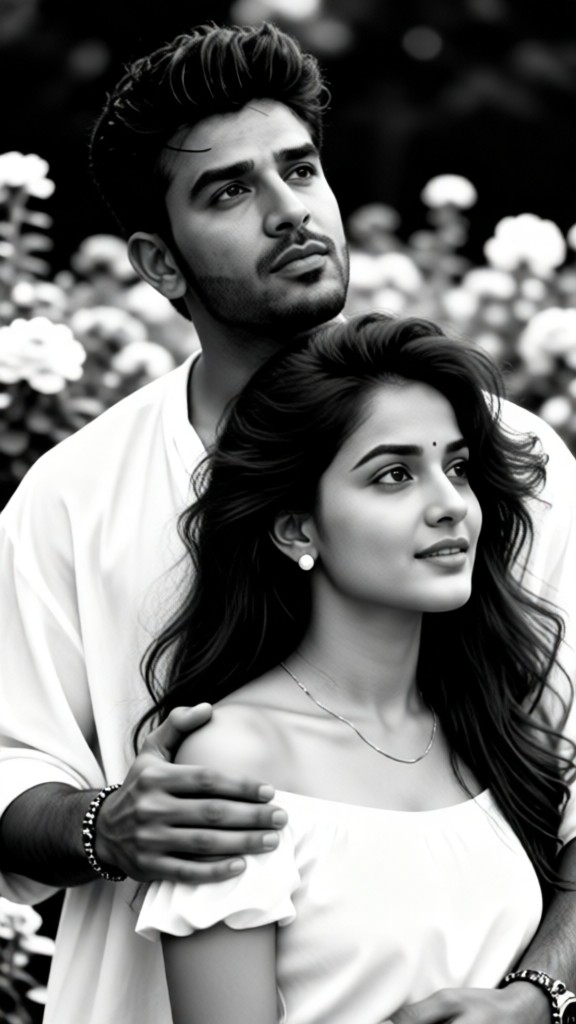
Official DraDra result example for a cinema-led direction. Use the reference image and occasion to control the styling; do not assume every vintage result is a documentary photograph.
DraDra workflow for an 80S photo
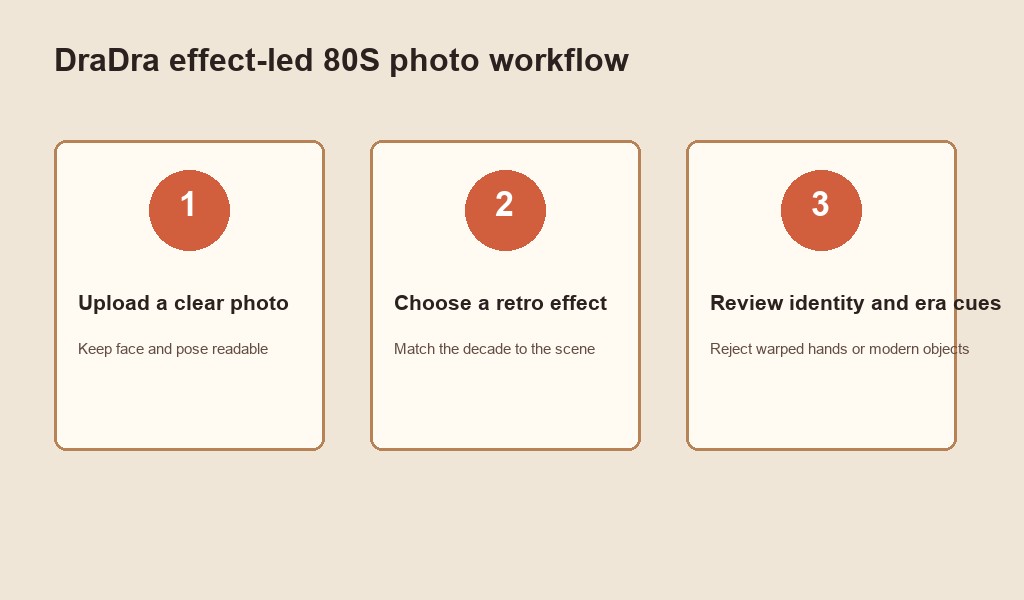
The effect-led route is: upload a clear image, choose a period direction, then review the generated result.
- Open DraDra and start from a clear portrait, couple image or family photo.
- Browse the current effect catalogue for a period-relevant direction, such as Blue Sari Retro Filter, Vintage Bollywood Photography, Old photo group photo or a Bollywood photography effect.
- Choose the closest visual starting point instead of stacking unrelated retro effects.
- Generate the image, then compare the face and body arrangement with the source. Check whether the requested decade appears in the clothes, room and camera treatment rather than only in a colour overlay.
- Keep the strongest result and revise one detail at a time: remove a modern phone, reduce neon, fix a hand or simplify the background.
DraDra is an AI art filter and style-transformation platform for photos and videos. Its role in this workflow is visual transformation: turning a source image into an art-directed retro scene while aiming to preserve the original subject and composition. Effect names, availability and usage rules can change, so confirm the live catalogue before publishing or using a result commercially.
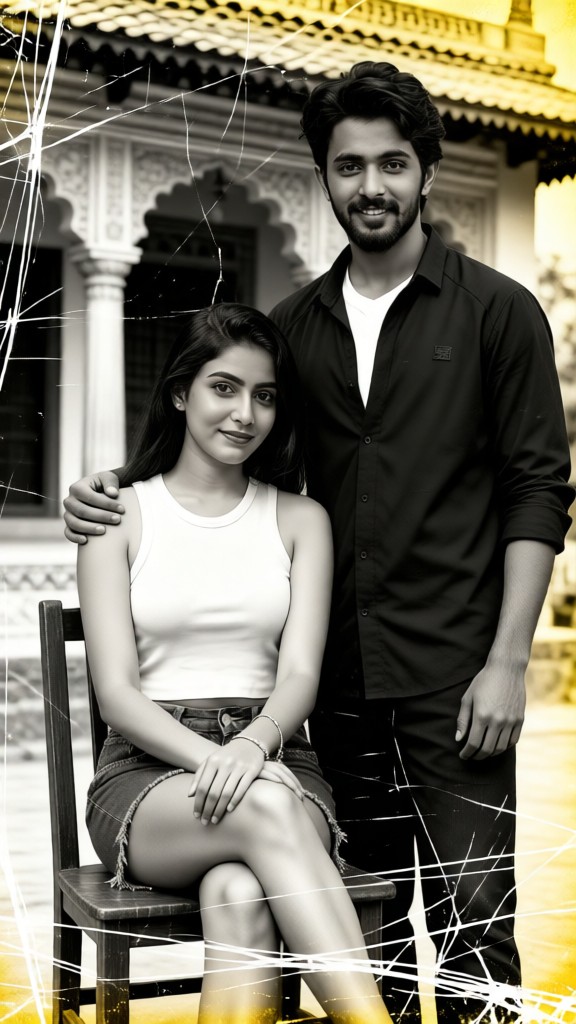
Official DraDra group-photo result. For multiple people, inspect each face, hand, relative position and clothing boundary separately.
Realistic 1980s photograph or 80s-inspired fantasy?
Do not use the same prompt for both.
| Goal | Visual cues | Avoid |
|---|---|---|
| Family-album realism | Direct flash, ordinary clothing, lived-in room, print fading | Neon grids and excessive props |
| Bollywood publicity | Practical studio light, expressive styling, rich but plausible colour | Copying a real actor or film poster |
| VHS still | Low dynamic range, mild colour bleed, date-stamp feel, soft detail | Heavy glitch effects and unreadable faces |
| Vaporwave fantasy | Magenta/cyan light, graphic backdrop, deliberate surreal styling | Calling it an authentic historical photograph |
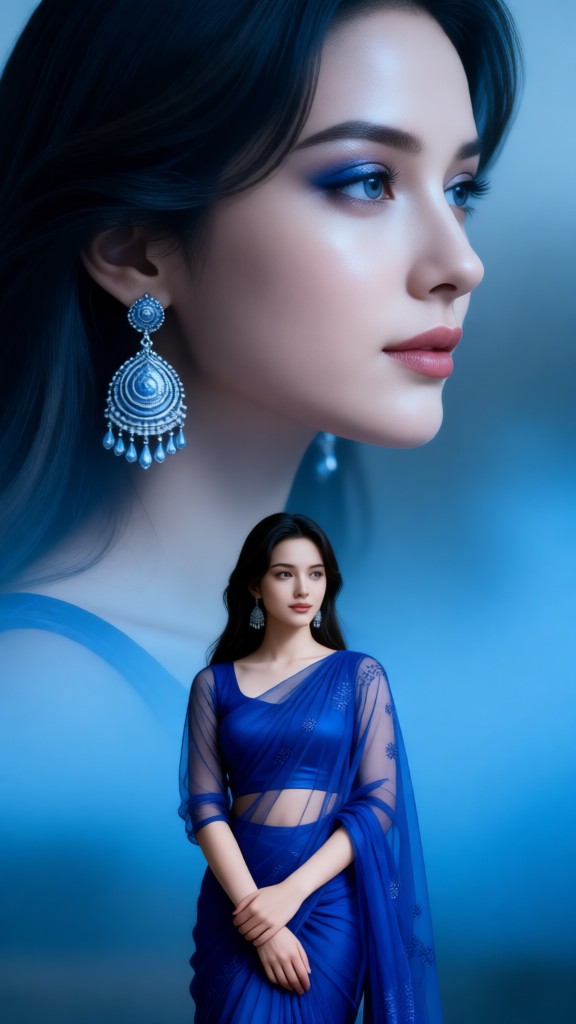
A stylised Bollywood direction can be more theatrical than a family snapshot. Label the creative intent honestly when the result is shared.
Fix the most common AI 80S photo problems
The face no longer looks like the reference
Reduce the requested movement and styling. Repeat the exact facial features, skin tone, age and expression that must remain fixed. Make identity correction the only change in the next generation.
The result looks like a costume
Replace broad words such as “retro fashion” with an ordinary context: “a family portrait in 1986,” “a school photograph from 1985,” or “a small photo studio in Mumbai.” Period realism comes from context, not from adding every familiar 80s prop.
It looks like a modern photo with a sepia filter
Describe the camera and print: direct flash, modest 35mm grain, mild optical softness, faded print colours and slightly uneven exposure. Keep the background and clothing historically plausible.
Hands, jewellery or sari borders warp
Simplify the pose and ask the AI to correct only the failed area while preserving the face, clothing and setting. Generate variations and reject any attractive image with broken anatomy.
Modern objects remain in the frame
List the exact anachronism: smartphone, LED strip, current logo, recent car, wireless earbud or modern screen. Ask for its removal while keeping the rest of the scene unchanged.
The image is too neon
Decide whether you want a realistic period photograph or an 80s-inspired fantasy. For realism, request restrained colour and ordinary lighting. For vaporwave, keep the neon but describe it as an intentional poster or art portrait.
What to inspect before sharing
- Is the person still recognisable at full size?
- Do eyes, hands, fingers and jewellery remain anatomically coherent?
- Does the clothing fit the stated place, year and occasion?
- Are the lighting direction, shadows and film texture consistent?
- Are any modern screens, logos or objects still visible?
- If several people appear, did the model preserve their positions and relationships?
- Could a viewer mistake the generated scene for a real historical photograph?
Use an AI-generated or AI-edited label when context could cause confusion. Only edit photos you own or have permission to use, especially family and wedding images. Follow the live product rules for privacy, copyright and commercial use; do not infer a commercial licence from the existence of an effect.
Frequently asked questions
What is an 80S photo?
It is an AI-generated or AI-edited image designed to look like a photograph from the 1980s. The style may be realistic, such as a family-album print, or intentionally fantastical, such as a vaporwave portrait.
Do I need a long prompt?
No. A ready-made effect can provide the visual direction. A prompt is useful when you need a specific year, region, occasion, outfit or camera treatment, or when you need to correct one failed detail.
How do I keep my face unchanged?
Use a sharp reference image, state that the uploaded photo is the definitive identity reference, preserve facial geometry and generate several variations. Fix identity drift before asking for more styling changes.
Can I create an Indian 1980s family photo?
Yes. Name the home, city or occasion, then describe ordinary clothing and period materials appropriate to that context. Avoid reducing the whole decade to one costume or a collection of stereotypes.
Is vaporwave the same as an authentic 1980s photo?
No. Vaporwave is an 80s-inspired visual language built around neon and graphic fantasy. An authentic-looking family or studio photograph usually needs quieter styling, simpler props and restrained film treatment.
Can I use DraDra for an 80S photo?
DraDra is relevant when you want to transform a photo into a stylised retro portrait, Bollywood-inspired scene or family image. Browse its current effects, choose a period-relevant direction and inspect identity and composition before sharing the result.
The best 80S photo starts with one clear decision
Decide whether you want a real-looking family photograph, a Bollywood publicity portrait, a VHS still or an 80s-inspired fantasy. Then give the AI a strong reference image, protect identity, describe the camera evidence and remove modern objects deliberately. DraDra can help turn that brief into an art-directed image, while the final quality still depends on reviewing the face, hands, clothing, setting and cultural context before publication.